How long car tires really last
The safe life of a tire is set by tread depth and age, not a guess at mileage. Here’s how to check both at home, and how to save fuel and tire life in the process.
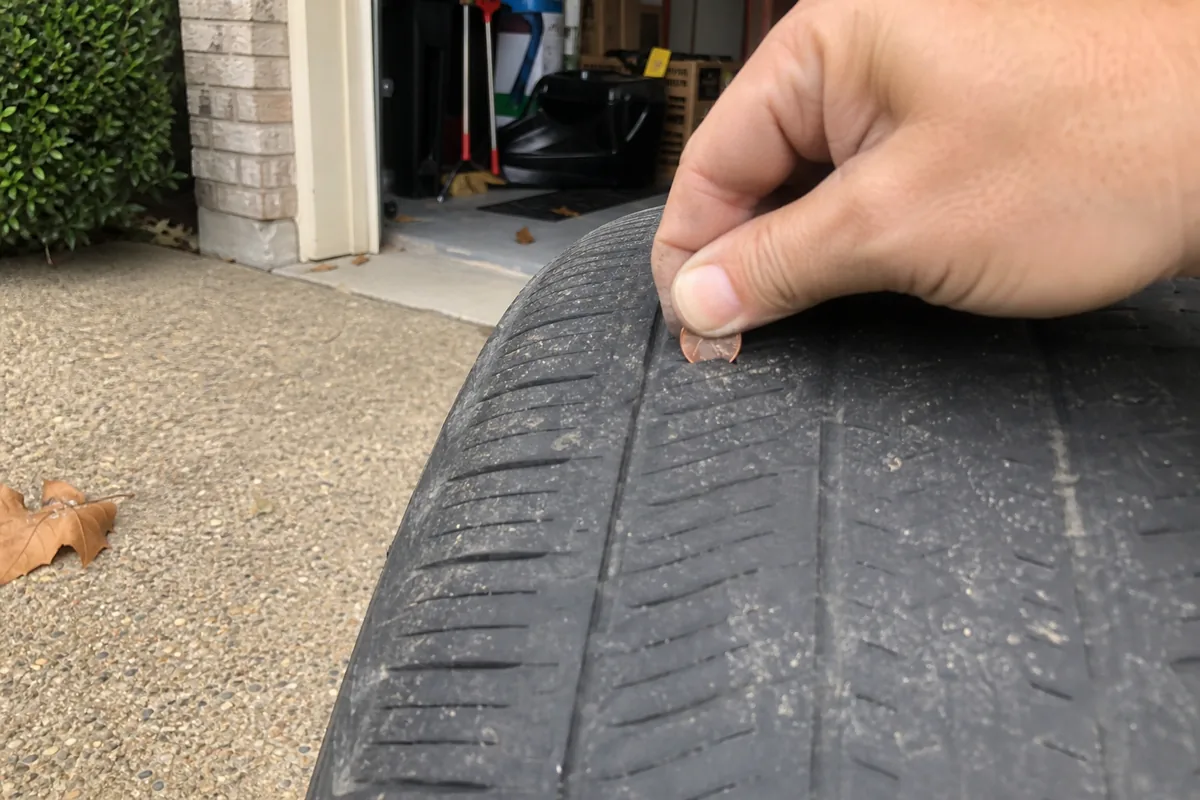
Tires last until they hit the safety line or age out. The federal cue is tread depth, not a guess at mileage. NHTSA is clear: "Tires are not safe and should be replaced when the tread is worn down to 2/32 of an inch." Age matters too. As NHTSA relays, "Some vehicle and tire manufacturers recommend replacing tires that are six to 10 years old, regardless of treadwear." NHTSA shares this as manufacturer guidance, not as a federal age mandate.
The two clear replacement cues
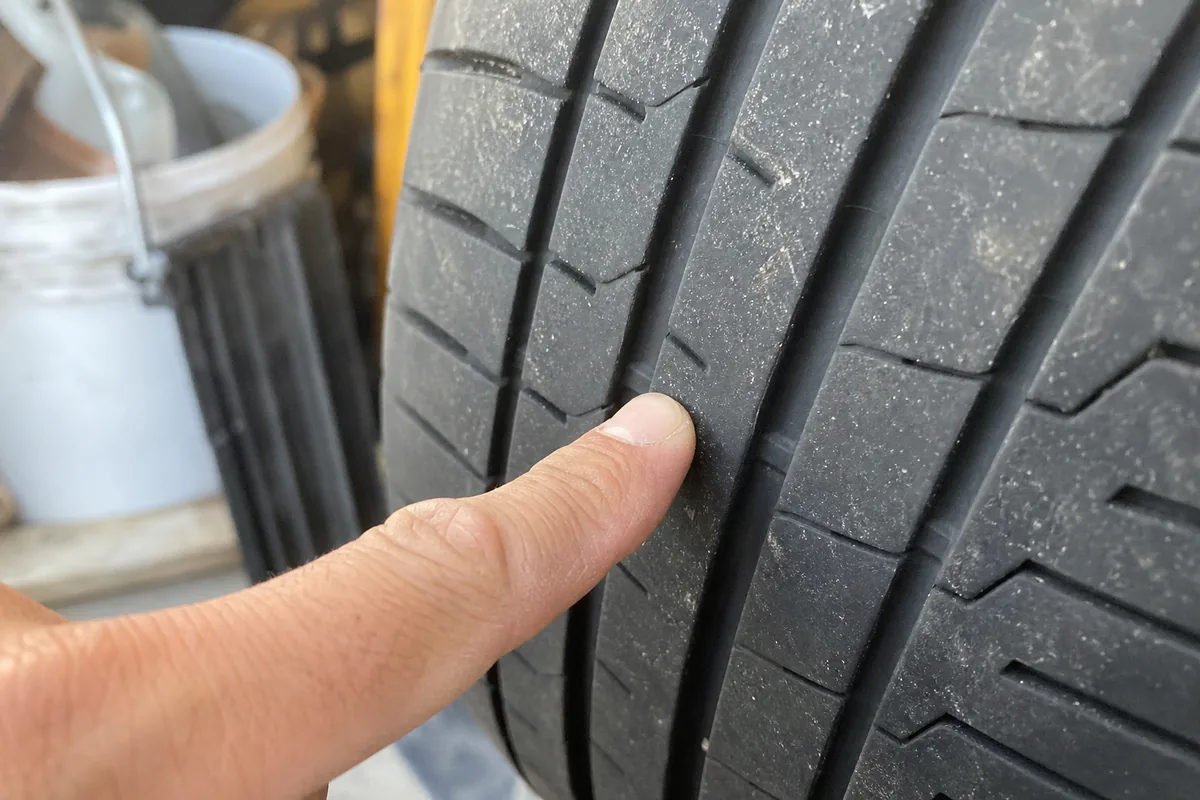
Wear bars make the decision simple. NHTSA says, "When the tread is worn down so that it's level with the tread indicator, it's time to replace your tires." These raised bars sit across the grooves. When the surrounding tread is flush with them, the tire has reached the end of its safe life.
Use the penny test as a quick at-home check. NHTSA explains, "If you can see the top of Lincoln's head, your vehicle needs new tires." Place a penny upside down into a main tread groove. Check several spots around each tire. If Lincoln’s head is visible anywhere, plan a replacement.
If a shop suggests early replacement, ask them to point to the wear bars and show a depth reading that proves 2/32 inch. Use the penny yourself to confirm.
How to check tire age on the sidewall
Look for the DOT Tire Identification Number, or TIN, stamped on the sidewall. NHTSA notes, "The last four digits of the TIN indicate the week and year the tire was made." Read each tire, including the spare. If the date shows advanced age, consider replacement even if there is tread left. That follows the guidance NHTSA shares from manufacturers about the six to 10 year window.
Inflation and rotation: small habits that add miles and save fuel
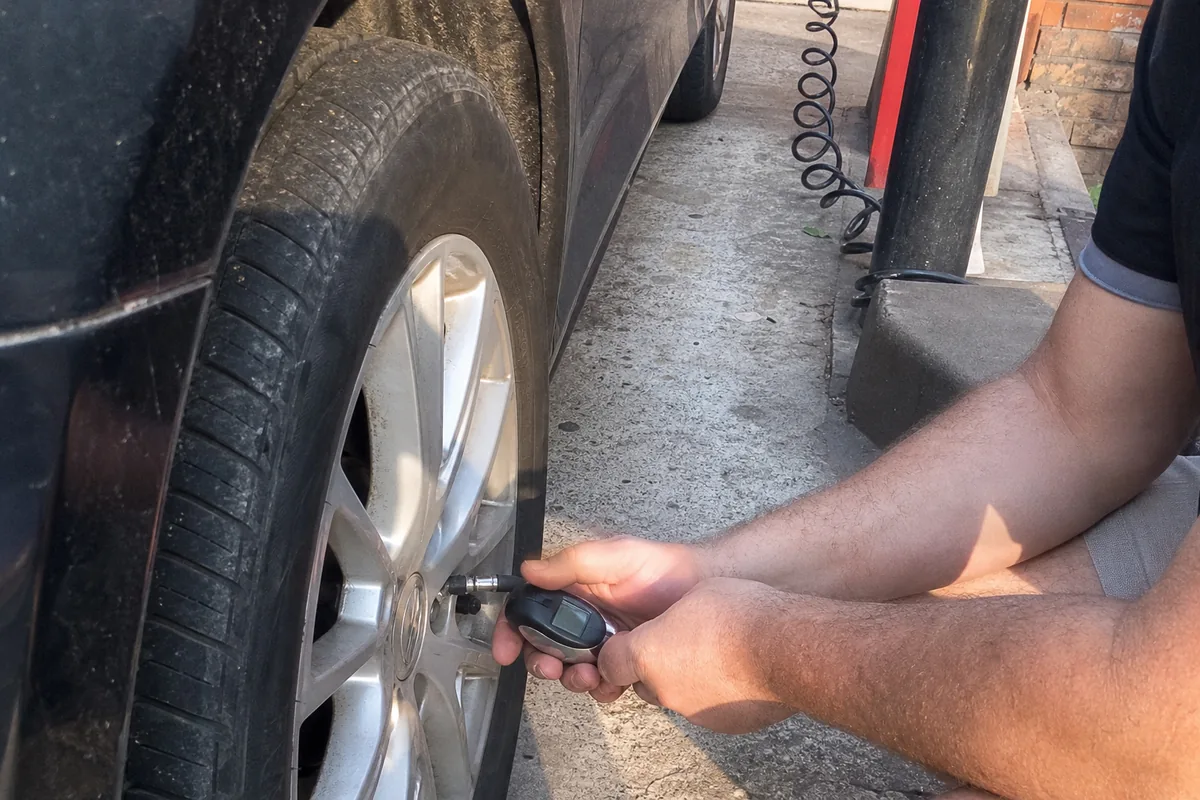
Underinflation wastes fuel. FuelEconomy.gov, from the U.S. Department of Energy and EPA, reports, "Under-inflated tires can lower gas mileage by about 0.2% for every 1 psi drop in the average pressure of all tires." NHTSA adds a cost frame: "Properly inflating your tires can save you as much as 11 cents per gallon on fuel." Inflation also protects the tire itself. NHTSA quantifies the benefit: "In fact, properly inflated tires can extend the average life of a tire by 4,700 miles."
Most drivers are leaving that value on the table. NHTSA points out, "Yet only 19 percent of consumers properly inflate their tires." Do a cold-tire pressure check monthly and before road trips. Use the pressure on your door placard, not the sidewall maximum.
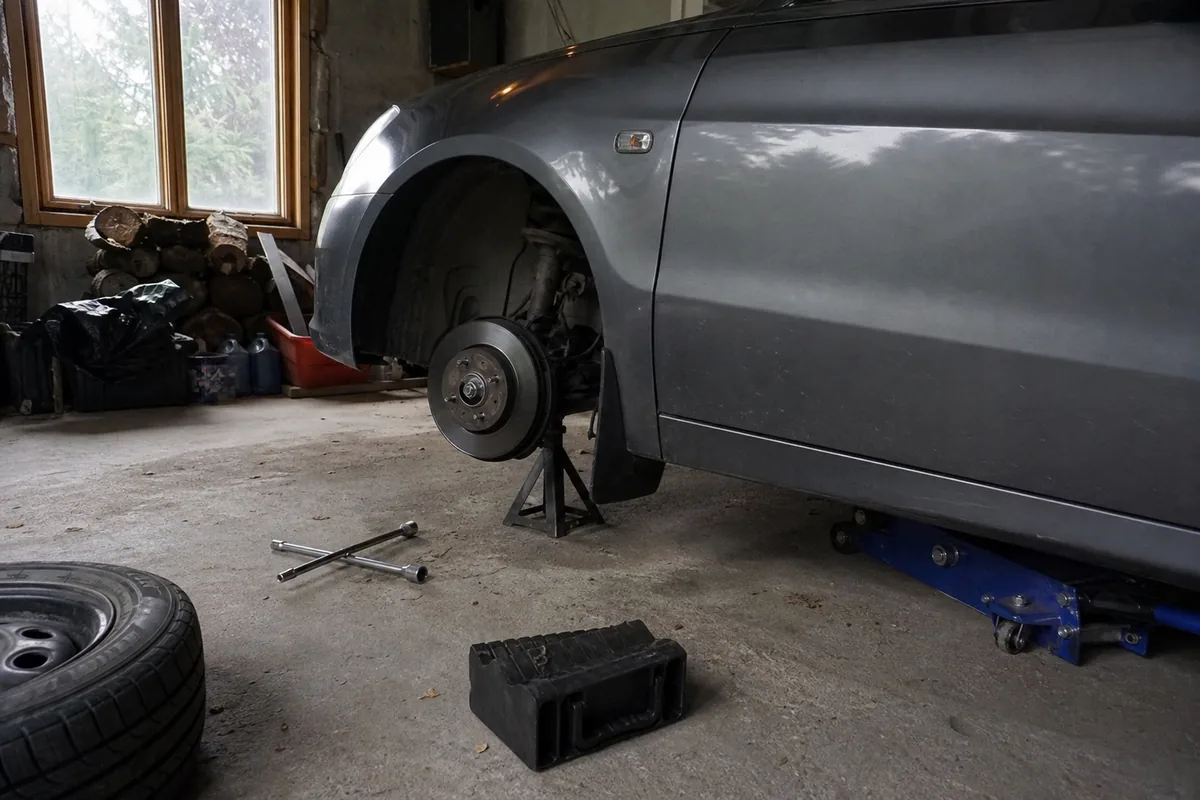
Rotation evens out wear. NHTSA advises, "If recommended by the vehicle manufacturer, rotate tires every 5,000 to 8,000 miles or sooner if uneven wear appears." Follow your owner’s manual for the pattern. Rotation helps you reach the full safe life before the tread hits the wear bars.
Alignment and load: what shortens tire life fast
Underinflation is not the only cause of early wear. Wheels out of alignment will scrub a tire. You may see one shoulder wear faster than the rest of the tread. If the car pulls or the steering wheel sits off-center on a straight road, get an alignment check.
Overloading also strains tires and builds heat. Stay within your vehicle’s rated load. If you tow or carry heavy cargo often, check pressure more often. Heat and weight can accelerate wear and may shorten a tire’s useful life.
Use UTQG treadwear grades to compare expected life when you shop
Treadwear grades under the Uniform Tire Quality Grading system give a comparative measure. NHTSA provides a simple benchmark: "For example, a tire graded 200 should have its useful tread last twice as long as a tire graded 100." Use that label to compare options within a size. Balance treadwear with traction and temperature grades that fit your driving.
A higher treadwear grade is not a promise. It is a comparative tool across tested conditions. Still, it is one of the few numbers you can use to compare expected tread life at the shelf.
TPMS helps, but do not rely on the dash light alone
Tire Pressure Monitoring Systems flag low pressure. NHTSA states, "All passenger cars, light trucks and vans that are model year 2008 or newer are required to come equipped with this feature." That light is a safety net, not a maintenance plan. Use a gauge long before the light comes on. Keep a simple pen-style or digital gauge in the glove box.
How to push the safe end of tire life (and avoid upsells)
- Use the wear bars and the penny test to judge tread.
- Read the tire’s DOT TIN to know its age.
- Keep tires at the door-placard pressure. FuelEconomy.gov and NHTSA quantify the fuel and life you save when you do.
- Rotate on schedule, per NHTSA and your owner’s manual.
- Fix alignment issues at the first sign of uneven wear.
When a retailer pushes early replacement, ask for proof. Ask them to show the wear bars, share a depth reading, and point to the DOT date code. NHTSA’s line is your line: "Tires are not safe and should be replaced when the tread is worn down to 2/32 of an inch." Use that federal threshold, plus the manufacturer age guidance that NHTSA shares, to make the call.